

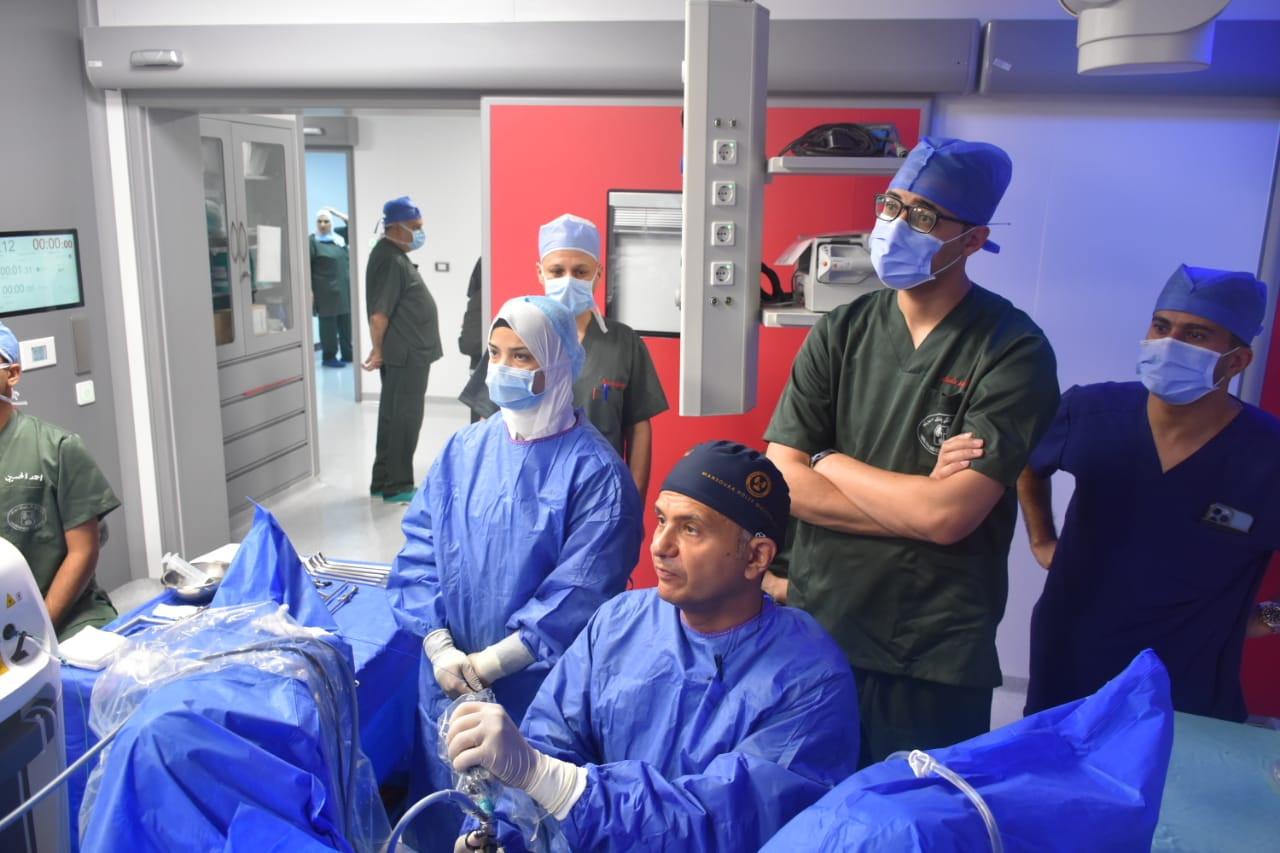
AEEP Endourology Surgery Masterclass is a comprehensive, high-level educational program designed to advance the knowledge and practical skills of urologists and surgical trainees in the rapidly evolving field of endourology. This masterclass focuses on precision-driven, minimally invasive techniques that represent the gold standard in modern urological surgery.

Led by experienced experts and key opinion leaders, the program delivers a balanced blend of evidence-based theory and real-world clinical practice. Participants will gain in-depth exposure to the latest endourological procedures, including stone management, flexible and rigid endoscopy, laser technologies, and advanced surgical decision-making. Emphasis is placed on improving operative efficiency, patient safety, and clinical outcomes through structured learning and hands-on insights.

The masterclass is designed to bridge the gap between traditional training and cutting-edge surgical innovation. Through case discussions, step-by-step procedural breakdowns, and expert tips, attendees will enhance their technical confidence and refine their approach to complex endourological cases.

Whether you are seeking to strengthen foundational skills or stay at the forefront of minimally invasive urological surgery, the AEEP Endourology Surgery Masterclass offers a unique opportunity to learn, engage, and excel in a dynamic, professionally enriching environment.

Course Timeline:
This video demonstrates the step-by-step technique of Holmium Laser Enucleation of the Prostate (HoLEP) for the management of benign prostatic hyperplasia (BPH). It involves early apical release using the veil sparing approach to protect the external urethral sphincter and reduce the incidence of postoperative urinary incontinence.
This video highlights the efficacy of Salvage HoLEP for residual prostatic adenoma after non-anatomical procedures as; prostatic artery embolization,MIST and bipolar TURP for large prostates. technical challenges of the procedure include distorted anatomical landmarks and fibrosis.
This video demonstrates laparoscopic partial nephrectomy for the management of localized renal tumor. It highlights renal hilar dissection, vascular control and warm ischemia, precise tumor excision with negative margins, and renorrhaphy techniques.
This video demonstrates the technique of Laparoscopic Vesicovaginal Fistula Repair It highlights meticulous dissection, complete fistula tract excision, tension-free multilayer closure of the bladder and vaginal defects, and interposition of a vascularized tissue flap.
This video demonstrates the steps of Laparoscopic Donor Nephrectomy performed for living kidney donation. It highlights meticulous hilar dissection, preservation of vascular length, safe ureteral handling, and controlled vascular stapling to optimize graft quality.
This video demonstrates the unique technique of mini Percutaneous Nephrolithotomy (mini PCNL) performed using a suction-enabled access sheath for the management of large renal stones. It highlights the importance of accurate calyceal puncture, tract dilation, coordinated laser lithotripsy with active suction of fragments.
This video demonstrates laser lithotripsy for the management of cystine stones, which are typically hard and relatively resistant. Cysteine stones are identified by their unique hexagonal crystals, with smooth yellow surface. The technique highlights optimized laser settings (higher energy, lower frequency), short pulse modulation, and dusting versus fragmentation.
This approach for HoLEP divides the adenoma into median and two lateral lobes, facilitating the space for easier enucleation and capsular plane identification. It is particularly useful during the learning curve, offering controlled dissection and clearer anatomical orientation.
This technique for HoLEP removes the adenoma as a single unit after circumferential apical mucosal incision and progressive retrograde capsular plane development. It requires greater surgical experience, but may improve operative efficiency once mastered.
This approach for HoLEP is designed to preserve a thin anterior mucosal “veil” to protect sphincter integrity and improve early continence recovery. It facilitates controlled early apical dissection while managing large adenoma bulk.
This variation of HoLEP utilizes advanced pulse modulation and higher power delivery systems (e.g., Magneto platforms) to optimize cutting efficiency and hemostasis. It allows faster tissue vaporization and improved intraoperative visibility.
This technique involves sequential enucleation of the prostate lobes using bipolar energy with mechanical blunt dissection along the surgical capsule. It provides good anatomical orientation and plane development, with fine hemostasis, making it particularly suitable during the learning curve.
In this approach, the adenoma is circumferentially dissected and mobilized as a single unit before detachment into the bladder. It promotes continuous capsular plane development, potentially reducing operative time. It requires greater technical confidence and anatomical experience.
This practical session focuses on identifying, preventing, and managing intraoperative challenges that may arise during AEEP procedures. Even experienced surgeons can encounter unexpected difficulties, and the ability to troubleshoot effectively is critical for patient safety and procedural success.
The Closing Ceremony marks the culmination of the AEEP Masterclass, celebrating the achievements, learning, and growth of all participants. This session provides an opportunity to reflect on key insights gained throughout the program, from foundational concepts to advanced surgical techniques.

Course Reviews:

Average Rating 0
0 Ratings
Details
5 Stars 0
4 Stars 0
3 Stars 0
2 Stars 0
1 Stars 0

No reviews yet.